



Introduction
New Zealand has got this amazing food culture going on nowadays. From Auckland to Wellington to Christchurch, people are absolutely loving their dining experiences & trying out new cuisines every time. The restaurant scene here is booming & honestly, there is space for more good places.
Maybe you have been thinking about opening your own spot for a while now. Maybe cooking is your passion & you want to share it with the world. Or you just want to be your own boss & build something from scratch. Whatever the reason, starting a restaurant in New Zealand is totally achievable.
This guide covers everything you need to know. Does not matter if you are planning to start from your home kitchen, have absolutely no experience in the industry, working with limited funds, or thinking about buying into a franchise. We have got you covered on all fronts.
1. Planning Your Restaurant Concept
Define What Type of Restaurant You Want
Before jumping into anything, you need clarity on what kind of place you are opening. Going for fine dining where people come for special celebrations? Or maybe a casual eatery where families can just chill & grab a bite?
Starting small is also smart. Home based restaurants, catering setups, pop ups, food trucks – these all work really well. Franchise options are there too if you want to use an established brand name.
Think about what matches your skills, your budget, & what people in your area actually need.
Do Your Market Research
You need to figure out who will actually eat at your place. Walk around the area where you want to open. Check out what restaurants already exist there. What is missing?
Chat with locals. What kind of food do they wish was available nearby? Look at what is trending in New Zealand right now. Plant based food is massive. Local & seasonal ingredients are big. Pacific fusion flavors are getting popular.
Study your competition properly. Visit other restaurants. See what they are doing right & where they are messing up. This research helps you find your unique spot in the market.
Write a Business Plan
Look, writing a business plan might sound boring but you actually need this thing. Banks will ask for it before giving you loans. Investors want to see it before putting in money. Even if you are self funding, it keeps you on track.
Your plan should have your restaurant concept, target customers, how much cash you need, profit projections, & marketing strategies. Put in a timeline for when you want to launch.
Free templates are available online or you can get help from Regional Business Partners Network in New Zealand.
2. Starting with Limited Resources
Opening with No Money or Very Little
Real talk, most people do not have massive cash reserves lying around. Here are ways to get funding:
Bank Loans: ASB, ANZ, Westpac – these banks offer business loans. You will need that business plan & maybe some security.
Investors: Find people who believe in what you are building & want ownership stakes.
Crowdfunding: Platforms like Pledgeme let you raise funds from multiple small investors.
Start Small: Food trucks, market stalls, pop up events – these need way less capital to begin.
Home Based: Convert your home kitchen to meet commercial standards. Saves a ton on rent.
Opening with No Experience
Never worked in a restaurant before? Makes things tougher but definitely not impossible. Here is what works:
Get some hands on experience first, even part time work helps. You will learn the real operations from inside. Take hospitality courses available in New Zealand – they cover food safety, management, cooking basics.
Hire experienced people. Get a solid chef or restaurant manager on board. Their expertise covers what you do not know yet.
Find yourself a mentor. Someone who has already been through this journey can save you from costly mistakes.
Choosing the Franchise Route
Franchises give you a ready made system. You get the brand name, tested recipes, proper training, & ongoing support.
Hell Pizza, Subway, Burger Wisconsin – these are some popular franchise options in New Zealand. The good part is lower risk & structured support. The catch is high initial costs (usually $200,000 to $500,000) plus ongoing fees. Also you get less creative freedom.
3. Legal Requirements & Business Structure
Register Your Business
First step is picking your business structure. Most restaurant owners go with sole trader (just you), partnership (you plus partners), or limited liability company (protects personal assets).
Register with the Companies Office if setting up a company. Get your IRD number for taxes. GST registration is needed if your revenue crosses $60,000 yearly (which it probably will).
Licenses & Permits You Need
This part is super critical. You literally cannot open without these:
Food Business Registration: Every single restaurant has to register with local council under Food Act 2014. You need either a Food Control Plan (bigger operations) or National Programme (smaller setups). Non negotiable.
Someone on your team needs food safety certification. Councils run these courses.
Alcohol License: Planning to serve drinks? You need an on license from District Licensing Committee. Someone needs a managers certificate too. Start this process early because it takes time. Costs are $500 to $1,000 plus yearly fees.
Other Permits:
- Resource consent from council
- Building permits for renovations
- Health & safety compliance docs
- Fire safety certificates
- Music licenses (APRA AMCOS)
- Outdoor dining permits if applicable
Employment Requirements
When hiring staff, proper employment contracts are a must. Follow Health & Safety at Work Act 2015. Register for ACC to cover workplace injuries.
Hiring international workers? They need valid work visas. New Zealand has specific visa categories for hospitality sector.
4. Financial Planning & Funding
What Will It Cost?
Starting a restaurant needs decent capital. Here is the breakdown:
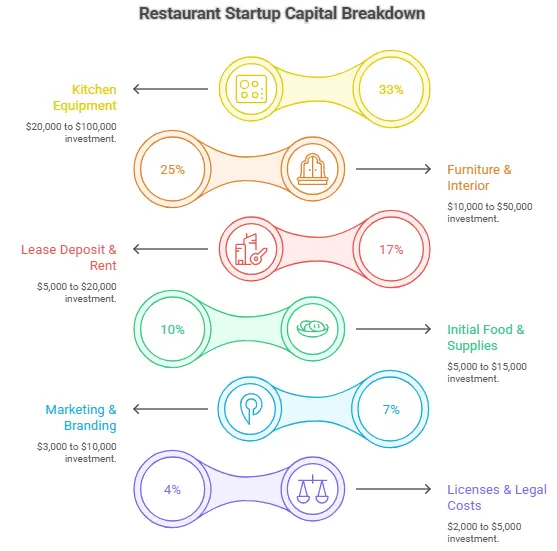
Small restaurant? You might manage with $50,000 to $100,000. Full scale place could need $200,000 to $500,000 or even more. Starting from home? Check out commercial kitchen cost to budget for upgrades needed to meet standards.
Getting the Money
Already talked about loans & investors. Also look into government support. Callaghan Innovation backs innovative food businesses. Regional Business Partners offer free advice & funding connections.
Some people use home equity or personal savings. Just be smart about not risking money you cannot afford to lose.
Managing Money Ongoing
Restaurants run on tight profit margins. Every dollar counts. Use accounting software like Xero or MYOB (super popular in New Zealand).
Watch your food costs like a hawk. Most restaurants target 28% to 35% of sales for food costs. Price your menu properly for profit. Actually calculate costs per dish, do not just guess.
Cash flow is crucial. Weekends bring money but expenses run all week. File GST returns on time. Maybe hire a bookkeeper or accountant.
5. Finding & Setting Up Your Location
Pick the Right Spot
Location can literally make or break your restaurant. High traffic spots like city centers bring walk ins but rent is crazy expensive there.
Destination restaurants in quieter locations work if your food is genuinely amazing & you market well. People will travel for great food.
Think about parking, public transport access, & surrounding businesses. Near offices works for lunch crowds. Near residential areas is better for dinner service.
Most people lease instead of buying. Leases typically run 3 to 9 years. Read the lease super carefully. What renovations are allowed? Who handles repairs? Can you renew?
Design Your Space
Kitchen workflow is key. Standard setup has separate zones for prep, cooking, plating, & washing. Meet all health & safety requirements for ventilation, flooring, & hand washing facilities.
Dining area should match your concept. Fast casual needs efficient seating layout. Fine dining needs space & proper ambiance. Accessibility for people with disabilities is legally required & just makes sense.
Equipment & Suppliers
Commercial grade equipment is a must. Home appliances will not handle restaurant volume. You need commercial ovens, ranges, fridges, freezers, prep tables, sinks, & dishwashers.
Check Restaurant & Catering Supplies or Moffat for new equipment. Second hand gear saves serious money. Look on Trade Me or contact suppliers about ex lease items.
Build solid relationships with food suppliers. You need meat, produce, dry goods, & specialty items. Bidfood & Gilmours handle most needs. For specialty stuff, hit up farmers markets or buy direct from producers.
6. Food Safety & Operations
Stay Compliant with Food Safety
Food Act 2014 is serious business. Council inspections happen. Fail them & you get shut down.
Your Food Control Plan or National Programme lays out exactly what to do. Proper food storage temperatures, preventing contamination, maintaining cleanliness – all covered.
Train all staff on food safety. Everyone needs to know hand washing protocols, safe food handling, & emergency procedures. Inspections happen regularly so always be prepared.
Create Your Menu
Your menu makes you money. Start focused rather than huge. You can always add more dishes later.
Use seasonal ingredients. They cost less & taste way better. New Zealand has incredible local produce, meats, & seafood. Build relationships with local suppliers.
Price strategically. Calculate exact ingredient costs for every dish. Factor in labor & overhead. Hit your target food cost percentage.
Mark allergens & dietary options clearly. New Zealand has high food allergy rates & lots of vegetarians & vegans.
Set Up Systems
Get yourself a solid restaurant POS system for smooth operations. They track sales, manage inventory, & process payments. Understanding restaurant POS cost helps with budgeting, typically $50 to $300 monthly depending on features.
For modern service, try implementing a QR code ordering system so customers can browse menus & order from their phones. For takeaway & delivery, platforms with food ordering system like Uber Eats, Menulog, or DoorDash work (but watch those commission fees).
Track inventory weekly. Know what you have got, what you need, & what is getting wasted. Schedule staff according to peak times.
7. Staffing Your Restaurant
Hire Good People
Your team literally makes or breaks the business. You typically need a chef (or head cook), kitchen hands, servers, maybe a manager.
Post jobs on Seek or Trade Me Jobs. Hospitality New Zealand has job boards. Ask current staff for referrals. Good people know other good people.
Proper employment contracts are essential. Include 90 day trial periods. Pay minimum wage at least but experienced people expect more. Chefs & managers want decent salaries.
Train Everyone Well
Set up a proper onboarding process. New staff should learn your menu, systems, standards, & values.
Train on food safety, customer service, & specific roles. Keep training ongoing. Menu updates, new equipment, skill development – make it regular.
Treat your team right. Hospitality has crazy high turnover because the work is tough & hours are long. Good wages, respect, & positive culture help retention.
8. Marketing & Launch Strategy
Build Excitement Before Opening
Start your restaurant marketing before you even open doors. Create social media accounts & post behind the scenes stuff. Show construction progress. Introduce your chef. Tease menu items.
Soft openings let you test everything with smaller groups before the official launch. Invite friends, family, local influencers. Fix issues while pressure is low.
Grand openings create serious buzz. Run specials, get local media involved, make it an event. Reach out to newspapers, food bloggers, radio stations. Learning how to attract customers to restaurants from day one sets you up for long term wins.
Get Online
You absolutely need to make an online presence for your restaurant right away. Understanding basic restaurant website requirements helps you build something functional without overspending. Keep it simple but include menu, hours, location, & contact details. Add online booking if you take reservations.
Social media is massive. Instagram & Facebook work best for New Zealand restaurants. Post quality food photos, share your story, & engage with followers.
Set up Google My Business. When people search restaurants nearby, you want to appear. Push happy customers to leave reviews.
Delivery platforms add revenue but take hefty cuts (20% to 35%). Decide if extra sales justify the fees.
Keep Customers Coming Back
First time customers cost money to acquire. Repeat customers bring the profit.
Launch a loyalty program. Maybe free meal after 10 visits. Run special events like wine tastings or themed dinners. Partner with local businesses for cross promotion.
Ask for feedback & actually implement it. If multiple people mention the same thing, fix it.
“Digital marketing is not optional anymore. Restaurants that invest in strong social media presence & online reviews see 40% higher customer acquisition. But remember, great marketing cannot save bad food or service.” – Tom Anderson, Digital Marketing Specialist for Restaurants, Auckland
9. Special Considerations
Home Based Restaurants
You can legally run a restaurant from home in New Zealand but rules exist. Check local council on zoning. Some residential areas ban commercial activity.
Your kitchen must meet commercial standards. Separate sinks, proper storage, commercial equipment. Health inspectors will check everything just like any restaurant.
Keep clear boundaries between home life & business. Gets tricky when customers visit your house.
Many successful places started at home then shifted to commercial premises as they grew.
Small Restaurant Operations
Small places can be super profitable with controlled costs. Lower rent, smaller team, less waste.
Use limited space smartly. Tables should turn multiple times per service. Build loyal local following instead of trying to appeal to everyone.
Consider specializing. Small menu done extremely well beats huge menu done average.
Franchise Restaurants
Franchises provide a complete playbook. Follow it. They have tested systems for literally everything from recipes to marketing.
Leverage the brand recognition. People already know the name. That is half your marketing sorted.
You will have less creative freedom though. Corporate sets the rules. Some people love the structure. Others find it restrictive.
10. Common Challenges & Solutions
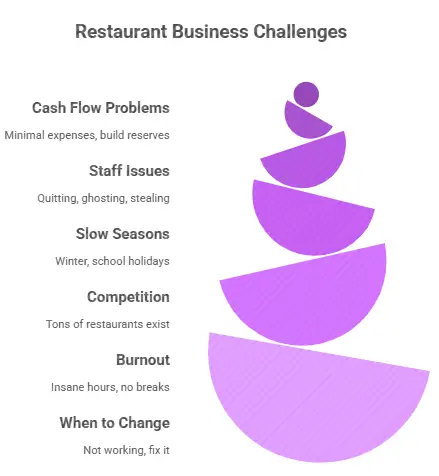
Cash Flow Problems: Restaurants struggle early on. Keep expenses minimal. Build cash reserves before opening. Skip fancy stuff you do not actually need.
Staff Issues: People quit. People ghost shifts. People steal sometimes. Hire carefully. Train properly. Treat them well. Always have backup plans.
Slow Seasons: Winter can be slower. School holidays change patterns. Save during good months. Run promotions during slow periods. Consider catering or events for extra income.
Competition: Tons of restaurants exist. You need a clear differentiator. Better food, better service, unique concept – whatever it is, own it completely.
Burnout: Restaurant owners work insane hours. Take actual breaks. Build a team you can trust. Make time for life outside work or you will end up hating what you built.
When to Change: Something not working? Change it. Menu items not selling? Fix them. Wrong location? Consider moving. Concept missing the mark? Pivot. Do not stick with failure just because of ego.
Conclusion
Starting a restaurant in New Zealand is challenging but totally doable. You need solid planning, serious hard work, & persistence. Follow legal requirements properly. Manage finances carefully. Hire good people. Serve great food.
Some restaurants fail, that is reality. But many succeed big time. The successful ones usually have owners who genuinely care, adapt when needed, & never stop learning & improving.
Start wherever you are right now. Home kitchen, food truck, small cafe, or full restaurant. Take that first step. Then the next. Before you realize it, you will be serving your first paying customer.
New Zealand needs more genuinely good restaurants. Maybe yours will be one of them. Once you build a solid loyal customer base, you can easily scale & expand your business further.
Frequently Asked Questions
How much does it cost to open a restaurant in New Zealand?
Costs vary massively based on size & concept. A small cafe or home based setup might start around $50,000 to $100,000. Full service restaurant typically needs $200,000 to $500,000 or more. Major expenses include equipment ($20,000 to $100,000), lease deposits & rent, initial inventory, licenses & permits ($2,000 to $5,000), & renovations. Starting small & scaling up makes more sense than going big immediately.
What licenses do I need to open a restaurant in New Zealand?
Every restaurant must register as a food business with local council under Food Act 2014. You need either a Food Control Plan or National Programme depending on your size. Serving alcohol? You need an on license from District Licensing Committee & someone needs a managers certificate. You also need business registration, IRD & GST numbers, resource consents, building permits for renovations, health & safety compliance, & potentially music licenses if you play music.
Can I start a restaurant from my home in New Zealand?
Yes, you can legally operate a food business from home but regulations apply. Check local council about zoning rules as some residential areas restrict commercial activity. Your home kitchen must meet commercial food safety standards with proper equipment, separate sinks, & adequate storage. You need the same Food Business Registration as any restaurant. Council health inspectors will visit & assess your setup. Many successful restaurants actually started at home before moving to commercial premises as they grew.