



Quick Summary I get asked this question a lot by restaurant owners here in NZ, so let me just say it straight. Good service is the real reason people come back, not just the food. Greet your guests fast, listen properly when they complain, keep training your staff often & use a bit of data to know your regulars. Do these few things & you will see the same faces walking in again & again, which is honestly the cheapest kind of marketing there is. |
Why Customer Service Makes or Breaks a Restaurant
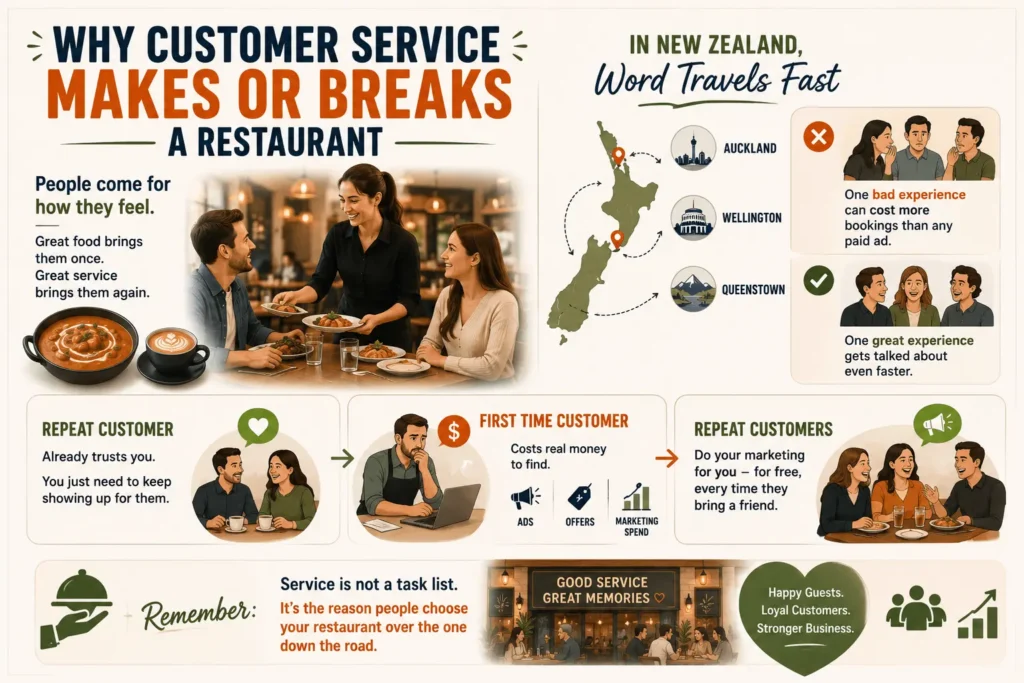
So I have thought about this question a lot & spoke to a few restaurant owners about it too. The very first thing that comes to my mind is, people are not really coming to your restaurant just for the food. They are coming for how they feel while sitting there eating it. You can serve the best butter chicken or the best flat white in the whole city, but if your guest feels ignored or rushed through the meal, they simply wont be back. Food gets someone to visit once. Service is what gets them to visit again.
New Zealand is a small place & word travels fast here, faster than most people realise. Auckland, Wellington, Queenstown, these are all pretty tight dining communities where everyone kind of knows everyone else. One bad experience & one annoyed customer telling their friend group can cost you way more bookings than any paid ad ever could. Same thing works in reverse too, a great experience gets talked about just as quick, sometimes even quicker.
Here is how I like to explain it to restaurant owners. A repeat customer already trusts you, so you dont need to convince them of anything. You just need to keep showing up for them the same way you did the first time round. A first time customer costs you real money to find, through ads, offers, marketing spends & so on. A repeat customer basically does your marketing for you, for free, every single time they bring a friend along.
So before we get into checklists & scripts & all that, just remember this one thing. Service is not some task list you tick off. It is genuinely the reason people pick your place over the one down the road serving almost the exact same menu.
First Impressions: How to Greet Customers in Restaurant Right
You basically get about 30 seconds. Maybe two minutes if its a proper busy night. That is really all the time a new guest needs to decide if your place feels warm & welcoming or feels like just another waiting room. Get this bit wrong & you are already playing catch up for the rest of their meal, no matter how good the food turns out.
A good greeting really is not complicated. Look at the person standing there, not the reservation book in front of you. Smile, say hello properly, keep the tone natural, not something that sounds rehearsed a hundred times. If there is a short wait, just tell them straight away & give a rough idea of time. Most people genuinely dont mind waiting a bit, what they mind is being ignored while they wait.
Host & server roles matter a lot here too, more than people think. The host sets that first tone right at the door. The server is the one who carries that same tone through to the table within the first minute of sitting down. If these two are not on the same page, say the host is warm & friendly but the server takes five minutes to even say hi, the guest picks up on that gap immediately, even if they cant quite explain why the vibe feels off.
Some common mistakes I keep seeing across NZ restaurants:
- Guests standing near the door too long with no eye contact from anyone on staff
- Rushed seating with basically zero small talk, straight to here is your table
- Staff chatting with each other instead of acknowledging the person who just walked in
- Nobody saying goodbye or thanks when guests are leaving, which honestly matters just as much as the hello
Quick Greeting Checklist • Eye contact within about 10 seconds of a guest walking in • A proper verbal greeting within 30 seconds • Mention the wait time upfront if there is going to be one • A smile that isnt forced, people can tell the difference • Thank them by name if you have got it, either at seating or when they leave |
Practical Ways to Improve Customer Experience in Restaurant
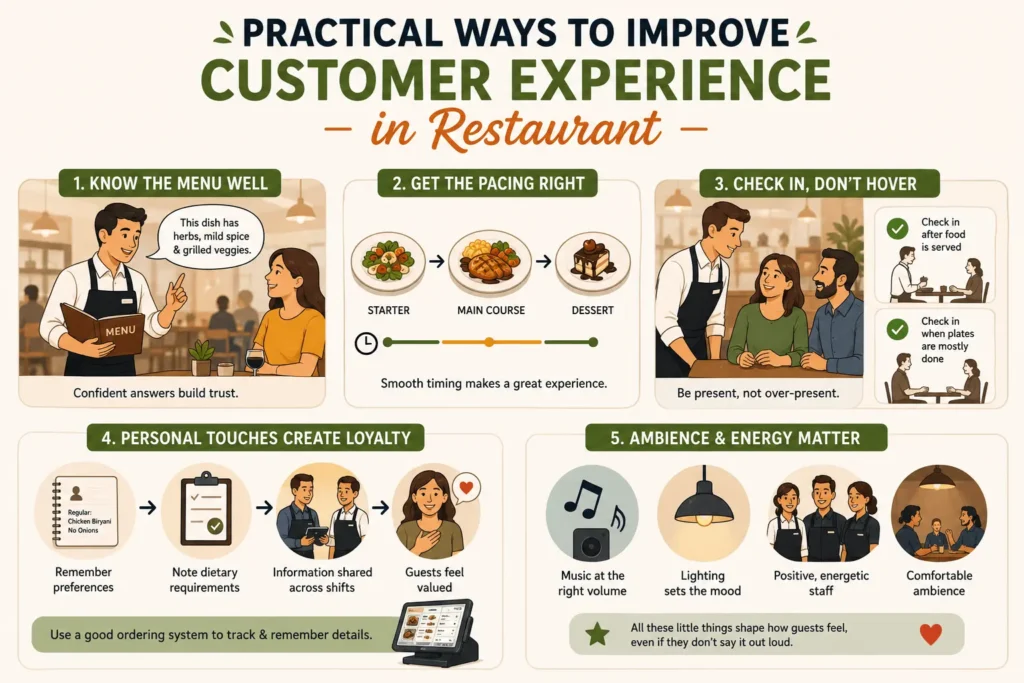
Once your guests are seated, its really the small things that start to matter. Staff should know the menu well enough to answer basic questions without having to run to the kitchen every single time. If someone asks whats in a dish or whats spicy, a confident quick answer builds trust straight away.
Pacing is another thing worth paying attention to. Nobody wants their starter & main coming out at the same time, & nobody wants a 40 minute gap between courses either. Good pacing feels almost invisible when its done right, but guests notice it instantly the moment it goes wrong.
Checking in without hovering is honestly a bit of a skill on its own. One check in after the food lands, one more when plates are mostly done, thats usually plenty. Standing right there watching every bite makes people uncomfortable, but disappearing completely the whole meal feels even worse.
Personal touches go a really long way too, more than people give them credit for. Remembering a regulars usual order, noting down a dietary requirement without them having to repeat it every visit, these small things make a guest feel like more than just a table number. A good food ordering system genuinely helps here too, it lets staff track these little details & pass them along between shifts, so the next server already knows what the last one figured out.
Ambience & staff energy count as part of the service too, even though people dont always think of it that way. Music thats too loud to hold a conversation over, lighting thats too bright or too dim, staff who look tired or a bit annoyed, all of this quietly adds up in a guests mind, even if they cant point to exactly what felt off.
Handling Complaints: Turning a Bad Moment Into a Loyal Guest
Complaints are going to happen, no way around it. Even the best run restaurants get them from time to time. What actually matters is not really the mistake itself, its what you do straight after it.
The order I always suggest is pretty simple. Listen first, dont jump in & interrupt. Acknowledge what they are telling you, even something as simple as you are right, that shouldnt have happened, works better than people expect. Act on it quickly, dont leave them sitting there waiting for a fix while their food gets cold. Follow up after, a quick check in a few minutes later shows them you actually cared, not that you just fixed it to move things along.
“I always tell my team, a guest complaint is not an attack, its feedback with emotion attached. Handle the emotion first, the fix comes easier after that.” Priya Nathan, Restaurant Operations Consultant, Auckland |
NZ diners tend to pick up pretty quickly when a response feels scripted rather than real. A stiff we apologize for the inconvenience lands a lot worse than a genuine sorry mate, let me sort that for you right now. Authentic really does beat polished almost every time out here.
Here are some common complaint scenarios & how I would recover from each one:
| Complaint | Quick Recovery Move |
| Food arrived cold | Apologize, remake it fast, offer a small comp like a drink |
| Long wait time | Update them honestly, offer something small while they wait |
| Wrong order | Fix it immediately, dont argue about who was wrong |
| Rude staff interaction | Manager steps in personally, genuine apology, follow up later |
Handled the right way, a complaint can actually build more loyalty than a meal that went perfectly from start to finish. Guests tend to remember how you treated them when things went wrong far more than when everything just went smoothly.
Building Blocks of Restaurant Service Quality
Good service really doesnt happen by accident, no matter how good your staff naturally are. It comes from training that actually sticks with people, not some one time induction that gets forgotten by week two.
Short, regular shift briefings genuinely work better than one long training session once a year. Five minutes before a shift starts, going over specials, any allergy notes, or anything that went sideways yesterday, keeps the whole team on the same page without eating into their time too much.
Role clarity matters a lot as well. Everyone should know exactly what they are responsible for, right from greeting through to plating & closing a table down. When roles get blurry, things slip through the cracks, & guests are always the first ones to notice.
Consistency across busy & quiet periods is honestly where a lot of restaurants trip up. Its easy enough to be warm & attentive on a slow Tuesday afternoon. Its a lot harder keeping that same energy up on a packed Saturday night. The restaurants that do this well protect their service standard even under pressure, which usually just means having enough staff on the floor & not overbooking beyond what the kitchen can actually handle.
Technology genuinely helps more here than people expect it to. A decent restaurant pos system cuts down order mistakes, speeds up billing & frees up staff to actually talk to guests instead of running numbers by hand all night. Table management tools help too, they stop the classic problem of overbooking or seating guests into a section thats already got too much on its plate, literally.
Turning First Timers Into Regulars: Customer Loyalty Tactics
Getting someone through the door once is honestly only half the job done. The real win is getting them to come back a second, third & tenth time.
Loyalty programs dont need to be complicated at all. A simple points system, a free coffee after ten visits, or a small birthday offer, all of these work because they give people an actual reason to pick you again instead of trying somewhere new down the road.
Personalized offers do even better in my experience. A message like hey, we know you love the lamb shanks, they are back on the menu this week feels a lot more thoughtful than some generic blast email everyone gets. Email & SMS follow ups after a visit, thanking them & maybe tossing in a small discount for next time, keep you sitting at the top of their mind.
In NZ specifically, local community ties matter quite a bit too. Sponsoring a local sports team, showing up at a school fundraiser, or running a seasonal menu built around local produce, these things build a kind of loyalty that discounts alone just cant buy. People genuinely like supporting places that feel part of their own neighbourhood, not just another chain.
If you are serious about growing repeat visits & your overall revenue, its worth looking into some proven ways to increase restaurant & cafe sales, since loyalty & sales growth usually end up going hand in hand anyway.
Simple Loyalty Framework • Visit 1 to 2: Make a strong first impression, ask how their meal was • Visit 3 to 5: Start recognizing them by name or order, send a small thank you offer • Visit 6+: Treat them like a proper regular, remember preferences, invite them to events or previews |
Using Customer Analytics for Restaurants to Personalize Service
You really cant improve what you dont measure, its as simple as that. Customer analytics sounds like a fancy term but its honestly just paying attention to the patterns already sitting in your data.
A few things I would suggest tracking. Repeat visit rate tells you how many guests are actually coming back, which is a far better health check than just looking at total covers. Average spend per guest shows whether your upselling & menu design are actually doing their job. Feedback trends, whether from reviews or comment cards, show you the same complaint popping up again & again before it turns into a much bigger problem.
“Restaurants that check their numbers monthly, not just at year end, catch small problems before they become big ones. A dip in repeat visits from one suburb, for example, tells you something is off there specifically, not everywhere.” Daniel Wu, Hospitality Data Consultant, Wellington & Christchurch |
Once you have got this data in front of you, the real value is actually turning it into action. If repeat visits are dropping on weekday lunches, maybe thats when to run a small offer. If feedback keeps mentioning slow service on Fridays, thats a staffing gap you need to fix, not just a coincidence. Data sitting in a spreadsheet doesnt help anyone at all, its only useful once somebody actually acts on what its telling you.
“The restaurants that grow fastest in my experience are not always the ones with the best food. They are the ones who actually read their own data & make small changes every month instead of guessing.” Aroha Mitchell, Owner, Multi Location Cafe Group, Bay of Plenty |
FAQ
How can I improve customer service in my restaurant fast?
Start with the greeting & the complaint response, honestly these two moments shape most of a guests overall opinion. Train your team on both this week & you will notice a difference pretty quickly.
What is the best way to handle an angry customer in a restaurant?
Listen without cutting them off, acknowledge their frustration genuinely, fix the issue quickly & follow up a few minutes later just to check they are happy. Skipping that follow up is the most common mistake I see.
Does customer service really affect restaurant sales in NZ?
Yes, quite directly actually. NZ has small, close knit dining communities where word of mouth travels fast. Good service brings repeat guests & referrals, both of which cost far less than paid advertising ever does.
Final Thoughts
Improving customer service in a restaurant isnt really about one big dramatic change. Its dozens of small ones stacked together, a better greeting, a faster complaint fix, a bit of training consistency & actually paying attention to your own data. Put together, these small habits are what turn a one time diner into someone who brings their whole family back next month. Get the people side right & honestly, the rest of the business tends to follow on its own.
If you are ever thinking about taking this same customer first approach & opening a new place across the ditch, our guide on how to start a restaurant in NZ covers the basics to get you going the right way.