



Quick Summary • Know your key numbers: average spend per cover, COGS, & table turnover. • Engineer your menu to push high-margin items & upsell coffee naturally. • Grow delivery sales via Uber Eats, DoorDash & Delivereasy, plus your own ordering channel. • Get found locally through Google Business Profile & social media. • Train staff to upsell warmly, not pushy. • Build loyalty programmes & feedback loops to keep customers coming back. • Explore corporate catering, retail products & events as extra revenue streams. • Review pricing & cut waste to protect your profit margins. |
Introduction: Tough Times, Big Opportunities
Running a restaurant or cafe in New Zealand right now is not easy. Costs are going up. Customers have more choices than ever. Delivery apps are eating into margins. Foot traffic in CBDs is still recovering. Wages keep rising with the Living Wage movement. GST does not help either.
But here is the thing. Kiwis love eating out. Brunch culture is massive. Flat whites are a religion. Local roasters, farm-to-table menus, & weekend markets are all part of everyday NZ life. The opportunity is absolutely real.
Whether you are in Auckland, Wellington, or Christchurch, there is room to grow. You just need to know where to look.
This guide covers exactly how to increase restaurant & cafe sales in New Zealand. We are talking practical stuff you can actually do this week, not vague advice. Let us get into it.
Section 01 — Foundation
Know Your Numbers Before You Try to Grow
Here is something most cafe & restaurant owners skip. They try to grow before they understand what is already happening in their business.
If you do not know your numbers, any marketing or strategy is just guesswork. The key metrics you want to track every week are:
Average Spend Per Cover (ASC): What does each customer spend on average? A simple way to calculate this is total revenue divided by number of covers served. If your ASC is $22 at brunch & your competitor is at $28, you know where to focus.
Table Turnover Rate: How many times does each table fill up during a service? More turns means more revenue without needing more space.
Cost of Goods Sold (COGS): Your food & drink costs as a percentage of revenue. For most restaurants, this should sit between 28% & 35%. Cafes running specialty coffee can target even lower on drinks.
Delivery vs Dine-In Order Value: Are your delivery orders worth as much as dine-in? Often they are not, which means your delivery channel needs work.
For tools, NZ operators are commonly using Foodship, Lightspeed, & Impos as their restaurant POS system. These make it easy to pull weekly reports without spending hours in spreadsheets. Connect your POS to Xero & you have a solid financial picture in real time.
If you are still not sure what system suits your setup, check out our guide on how to choose the best POS system in NZ so you can make the right call before spending money.
Section 02 — Menu Strategy
Menu Engineering: Sell More of What Earns Most
Your menu is one of the most powerful sales tools you have. Most owners treat it as just a list of food. Smart operators treat it as a conversion tool.
Menu Design That Works
The Golden Triangle is a real thing in menu psychology. When someone opens a menu, their eyes naturally go to the top right, then top left, then centre. Put your highest-margin items in those spots.
Remove dollar signs. Research consistently shows that removing the “$” symbol reduces price sensitivity. People just order what they want instead of calculating cost.
Limit choices. Too many options creates decision paralysis. Aim for around 7 items per category. Streamlining your menu also reduces kitchen complexity & waste.
Use seasonal specials strategically. “This week only” language creates urgency & makes your menu feel fresh.
“A well-engineered menu is your best salesperson. It works 24 hours a day, never calls in sick, & never forgets to upsell the dessert.” |
How to Increase Coffee Sales in Your Cafe
Coffee is where cafe margins live. A great flat white costs very little to make & sells for $6 to $7. But most cafes are leaving money on the table by not upselling coffee properly.
Here is what works:
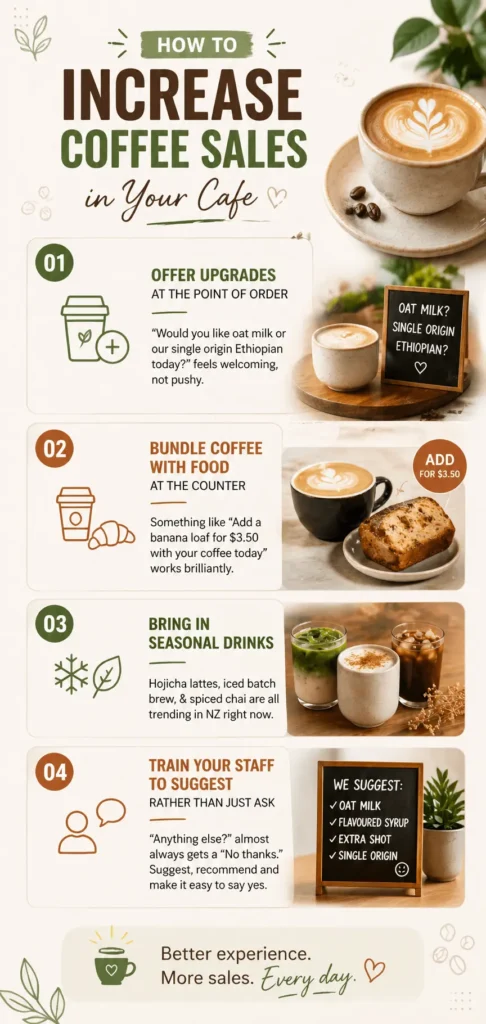
Bundling to Lift Average Order Value
Set lunch deals & prix-fixe menus are great for restaurants because they offer perceived value while keeping your kitchen efficient. For delivery, family meal packs are high value & easy to prepare in bulk. At the checkout stage of any order always prompt for add-ons like sides, dips, & desserts.
Section 03 — Delivery Growth
How to Increase Restaurant Delivery Sales in NZ
Delivery is no longer optional. Kiwi customers expect it. But if you are not managing your delivery channel smartly, you are probably just working harder for smaller margins.
Picking the Right Platform
In New Zealand, the main players are Uber Eats, DoorDash, & Delivereasy. Delivereasy is NZ-founded & is growing in regional cities, which is worth paying attention to if you are outside Auckland.
All three charge commission, usually between 20% & 35% per order. That adds up fast. The smarter play is to use these platforms to get discovered, then push repeat customers to order directly through your own website or a food ordering system that charges flat fees instead of per-order commissions.
This is where a proper online food ordering system pays for itself very quickly. You keep more of every sale & own the customer relationship.
Make Your Menu Delivery-Ready
Not everything on your dine-in menu works for delivery. Think about what travels well. Burgers in good boxes, noodle dishes with sauce separate, & pizza all hold up. Create a delivery-specific version of your menu with fewer, better options for faster kitchen prep & better customer experience on arrival.
Packaging is also a brand statement. Sustainable, well-designed packaging that feels premium makes a real difference to repeat orders & social media sharing. Several NZ-based suppliers offer compostable packaging at competitive prices.
Promotions That Drive Delivery Orders
- Run a first-order discount for new customers.
- For repeat customers, a simple loyalty stamp via your own ordering system works better than relying on the platform features.
- Target lunchtime delivery specifically for corporate CBD customers placing orders for meetings.
- NZ sporting events are gold for delivery. All Blacks test matches, Bledisloe Cup games, & Super Rugby finals all drive massive delivery spikes. Plan your promotions around these in advance.
Section 04 — Digital Presence
Local SEO & Getting Found Online
If someone searches “best cafe Ponsonby” or “restaurant open late Wellington”& you do not show up, you have lost that customer before they even knew you existed.
Google Business Profile is Free & Powerful
Claim your listing if you have not already. Then fill every single field. Add photos of your food, your space, & your team. Update your hours for holidays. Link to your menu. Add your location correctly.
Then get reviews. Ask every happy customer. Put a QR code on your receipt that goes straight to your Google review page. Aim for at least 20 to 30 genuine reviews before you run any paid advertising.
Reply to every review, good & bad. Google rewards businesses that engage. & it shows potential customers that you care.
“In the NZ market, local community presence matters more than big ad budgets. A genuine post in a suburb Facebook group will outperform a $500 ad spend for most independent restaurants.” — Jess Thompson, Digital Marketing Strategist, Hospitality NZ |
Social Media That Actually Works for NZ Hospitality
Instagram Reels of behind-the-counter moments, latte art, or a chef plating a dish perform incredibly well in NZ. Kiwis love authenticity. You do not need a professional camera. A phone works fine.
TikTok is growing fast among NZ under-35s. Short, genuine food content regularly goes local-viral & brings in new customers.
Facebook community groups for local suburbs are still very active in NZ. A post in a local group about a new menu or a weekend special can fill tables overnight for free.
If your budget allows, find NZ-based micro-influencers with 1,000 to 50,000 followers in your city. Their audiences trust them & the cost of collaboration is reasonable.
Email & SMS Still Work
Build a list through your loyalty programme or a QR code sign-up on your counter. Send a weekly email with this weeks specials & a direct link to book or order. SMS for last-minute table availability or surprise deals gets exceptionally high open rates compared to email.
Section 05 — In-Venue Experience
Dine-In Sales: Increase Spend Per Visit
Getting customers through the door is half the battle. Getting them to spend more while they are there is where the real profit is made.
Train Your Team to Upsell Naturally
Kiwi culture is relaxed & friendly. Hard-sell tactics will turn customers off immediately. But warm, genuine suggestions work really well.
The key is specificity. Instead of “Can I get you anything else?”, try “We have a really good lemon tart today if you want something sweet to finish.” That kind of suggestion feels like a recommendation from a friend, not a sales pitch.
Train staff to always open by offering drinks first. That first 60 seconds after seating is when customers are most open to suggestions. Run regular 10-minute tastings before service so staff know exactly what they are recommending.
Your Space Does a Lot of the Selling
Music tempo has a documented effect on how fast people eat & order. Faster tempo in busy periods can help table turnover. Slower music in the evening encourages lingering & more drinks ordered.
If you have outdoor space, maximising it during the NZ summer can significantly increase your covers. Check with your local council on outdoor seating permits.
A QR code ordering system on the table also helps upsells by showing photos & descriptions at the moment of decision, without a staff member needing to be present.
Events & Functions Fill the Quiet Times
Monday to Thursday is where most restaurants struggle. Private functions & events during these periods can transform your weekly revenue. Wine tasting nights, chef-apos;s table experiences, & trivia evenings all work well in NZ. Promote these on Auckland & Wellington event listing platforms as well as your own social channels.
Section 06 — Loyalty & Retention
Turn First-Timers into Regulars
A new customer who visits twice is worth far more than two separate first-time customers. Retention is always cheaper than acquisition.
Loyalty That Works in NZ
The classic paper stamp card still has a place. But digital is better because you collect customer data. Apps like LoyaltyDog & Stamp Me integrate with most POS systems & make it easy to run automated birthday offers & milestone rewards.
Birthday offers are consistently the highest-redeemed loyalty benefit. A simple free coffee or dessert on a customer birthday brings them in & they almost always bring someone with them.
For cafes specifically, a points system tied to coffee spend rewards your most frequent customers & keeps them away from competitors.
Make Reviews a Habit
Put a QR code on every receipt. Train staff to mention it. Respond publicly to every review within 24 hours. If you get a bad one, reply professionally & resolve it wherever possible. A handled complaint often turns into a loyal customer.
Section 07 — Wholesale & B2B
Revenue Beyond the Counter
Your kitchen & your brand have more earning potential than just your trading hours.
Corporate & B2B Catering
Office catering in NZ cities is a huge, often overlooked opportunity. Morning tea platters, working lunch deliveries, & end-of-quarter drinks catering are all things corporate teams need regularly.
Co-working spaces like BizDojo in Auckland & Wellington & GridAKL are always looking for food partners. A simple partnership for a daily coffee drop or lunch delivery can add meaningful recurring revenue.
Retail Products
If people love your house sauce, your granola, or your coffee blend, they will buy it to take home. Sell it in your cafe. List it on your website. Take it to a farmers market, Matakana, the Wellington Night Market, or Otago market. Several NZ cafes have built genuine product businesses this way.
Section 08 — Pricing & Costs
Boost Profit, Not Just Revenue
Smart Pricing for the NZ Market
Psychological pricing works. $18.50 feels meaningfully less than $19 in the minds of many customers, even though the difference is 50 cents.
In NZ, a Saturday brunch surcharge has become widely accepted. If you are not already doing this on your busiest days, it is worth considering. Most customers will not push back if it is communicated clearly on the menu.
Review your menu prices at least once a year against your COGS. If ingredient costs go up 10% & your prices stay flat, your margin quietly disappears. For a clear breakdown of all the numbers involved in running a food business, our guide on the cost to start a cafe, restaurant, or food truck in NZ is a great starting point.
Cut Waste, Not Quality
Prep-to-order discipline is one of the fastest ways to improve margins without changing your menu. Know your par levels. Cook what you need, not what feels like a safe buffer.
Near-expiry stock goes into staff meals & daily specials, never the bin. The Too Good To Go app is gaining traction in NZ cities & is a genuinely clever way to sell end-of-day surplus at a reduced price instead of throwing it out.
Conclusion: Pick One Thing & Start This Week
There is a lot in this guide. But the mistake most restaurant & cafe owners make is trying to fix everything at once & ending up changing nothing.
Pick one area. Just one. If your delivery revenue is low, start with Section 3. If your cafe margins feel thin, start with your coffee upsell strategy in Section 2. If you are invisible online, go straight to your Google Business Profile today.
The right technology makes all of this easier. If you are looking at upgrading your setup, understanding restaurant POS system costs upfront will help you budget properly & avoid surprises.
To grow your restaurant or cafe in New Zealand you do not need a huge marketing budget. You need clarity on your numbers, a menu that works hard, a delivery channel that actually makes money, & a team that knows how to look after people.
If you are earlier in your journey & still planning your concept, our guides on how to start & open a restaurant & how to start a cafe in NZ walk you through everything from licensing to launch & if you are ready to put a proper strategy together, our restaurant marketing plan resource gives you a structured approach to attracting & keeping customers, including how to attract customers to restaurants & cafes in the NZ market specifically.
Start today. One step is enough.